
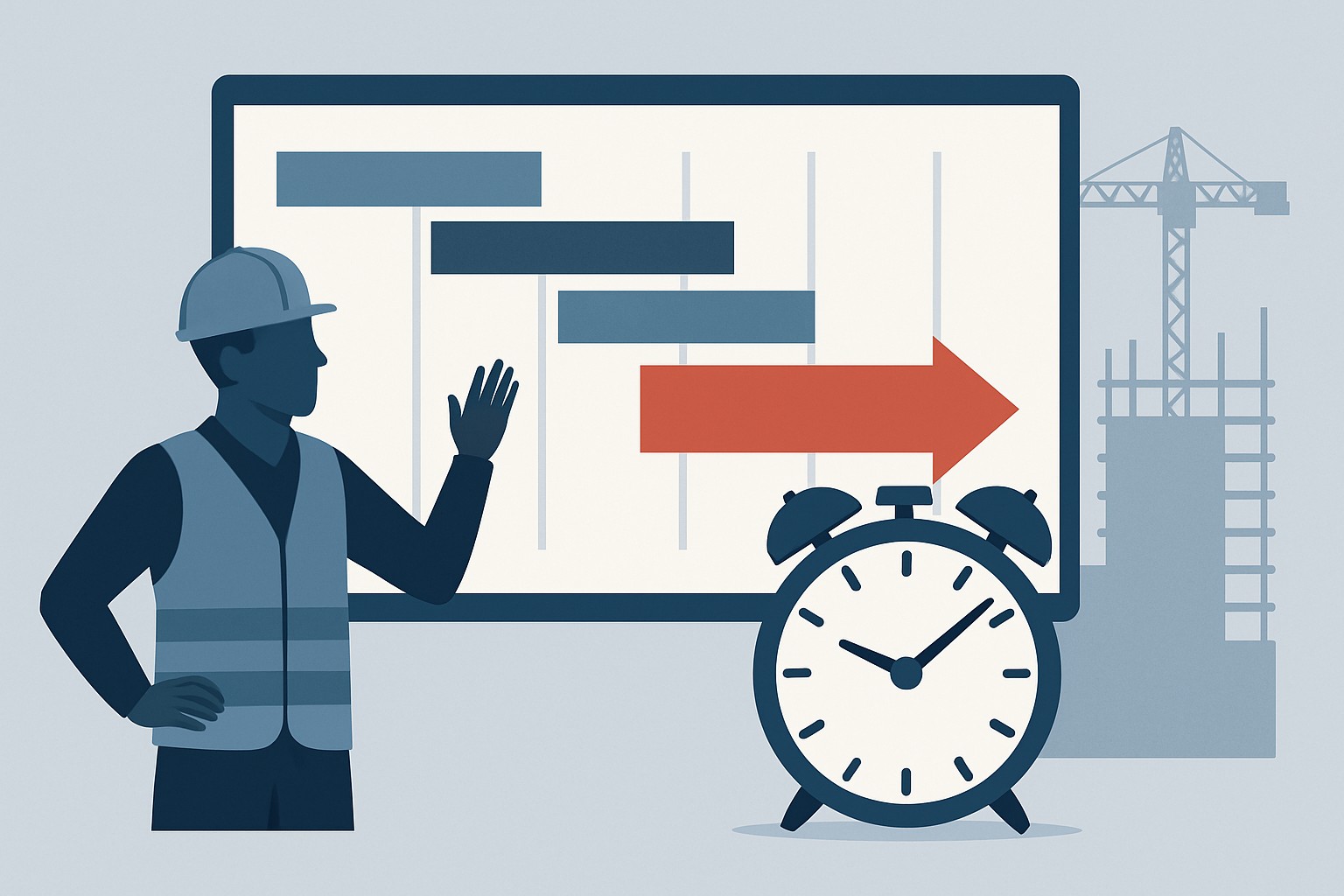
Slippage for construction claims is one of the most common—and costly—issues in project delivery. It refers to variance that affect scheduled activities and may impact project completion. If not identified and managed early, slippage leads to missed milestones, increased costs, and potential disputes. This blog outlines how to detect slippage before it escalates, how to document it properly for claims, and what global mega projects can teach us about controlling it.
Spotting Slippage Before It Becomes a Claim
Early detection is critical. Start by comparing actual progress against your approved baseline schedule. Pay close attention to activities with minimal float, as these are most likely to cause critical delays.
Look for early indicators such as:
- Delays in permits or approvals
- Reduced labor productivity
- Missed material deliveries
- Frequent rework or out-of-sequence execution
Use tools like earned value management (EVM) and critical path analysis to detect slippage early. Weekly lookahead schedules and daily reporting provide additional insight to prevent problems from compounding.
How to Document Slippage for Construction Claims
In order to support a delay claim, you must demonstrate that the slippage occurred, that it wasn’t your fault, and that it caused a real delay to the project completion.
Begin with a strong baseline schedule. It must be logic-driven and reflect contractual milestones. Document daily site progress through diaries, photographs, and field reports.
Update your as-built schedule regularly. This gives a clear view of when and where slippage occurred. Maintain all project correspondence—emails, letters, and meeting notes—as these provide context and responsibility.
When a delay occurs, use a recognized method like Time Impact Analysis (TIA) to model its effect on the overall schedule. This shows a clear link between the event and the resulting delay.
Most importantly, comply with your contract’s notice requirements. Timely and documented notices preserve your entitlement to claim for time or cost.
Global Best Practices to Control Slippage
Major infrastructure projects around the world offer useful lessons:
- Crossrail (UK) used 4D BIM and integrated change management to flag schedule risks early.
- Burj Khalifa (UAE) implemented phased procurement and weekly tracking to catch slippage immediately.
- Sydney Metro (Australia) used real-time dashboards and early contractor involvement to reduce risk of delay.
Slippage for construction claims is manageable with early warning, clear records, and a structured approach. Detect the problem before it affects key milestones. Document every step for potential claims. And follow the lead of successful mega projects to avoid repeated mistakes. Managing slippage is key to delivering on time—and protecting your contractual rights.
Need Expert Guidance?
Looking to enhance your claim awareness? Connect with us for expert insights and let’s solve your contractual issues together!


You can explore related articles below for more insights!


If you have any queries, you can contact through the channels: