
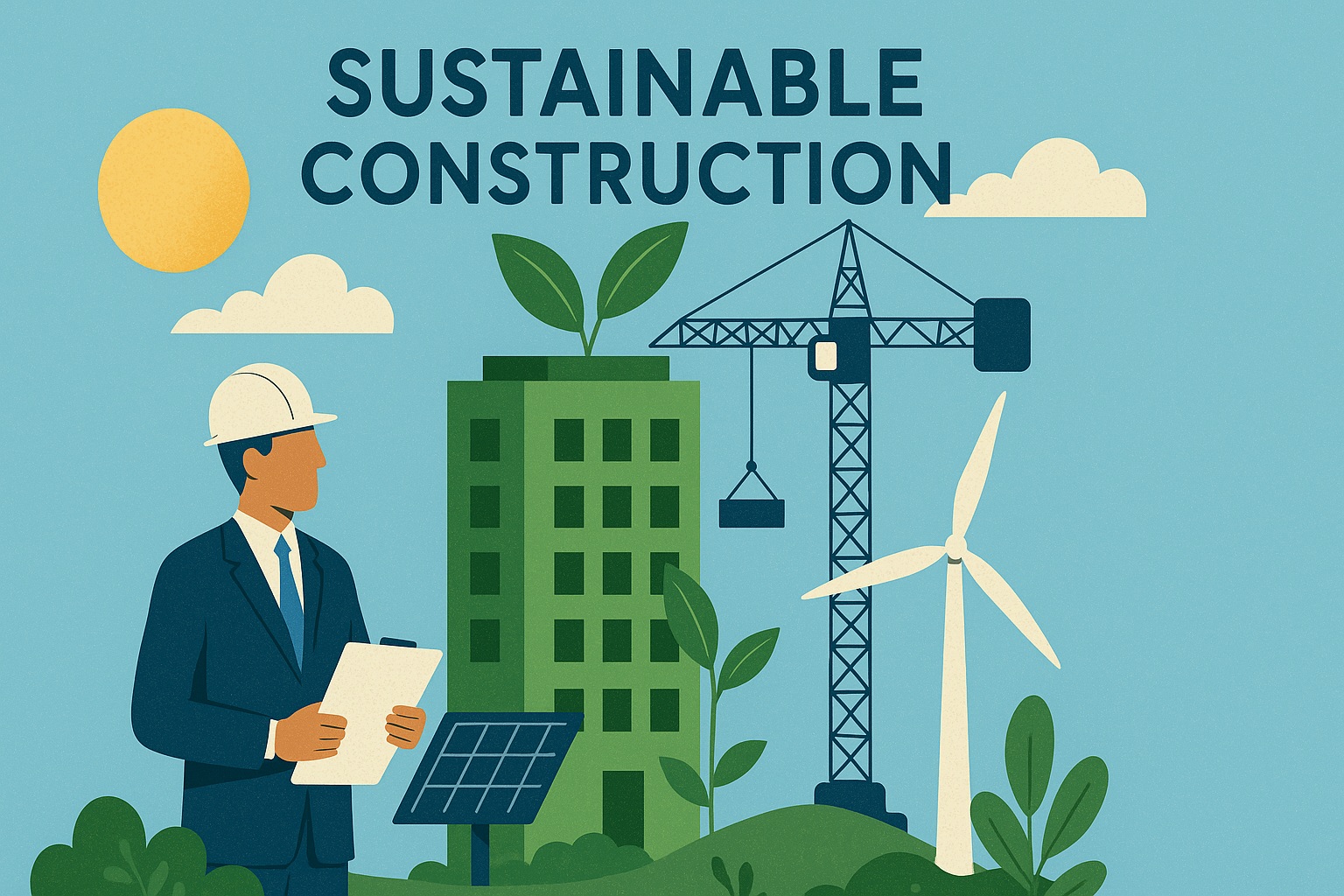
Sustainable construction has become a fundamental priority in modern project delivery, addressing not only environmental impact but also long-term value and resilience. In the construction sector, where projects often face challenges like cost overruns, delays, and low productivity, sustainability offers a roadmap for delivering better outcomes across multiple dimensions.
This blog explores the role of the project manager in promoting sustainable construction, focusing on how they evaluate and manage the political, ecological, economic, technological, regulatory, and organisational impacts of their projects. Real-world examples and actionable insights from industry practice are shared throughout.
Construction projects shape urban and rural environments for generations. Traditionally, the focus was on time, cost, and scope. However, with increasing awareness of environmental and societal responsibilities, project professionals must now consider broader implications of sustainable construcion.
The Association for Project Management (APM) highlights the importance of understanding the project’s environment—both within and beyond the client’s organisation. This shift calls for a holistic mindset where the project’s lifecycle value and legacy are central concerns.
In this evolving landscape, project managers are key drivers of transformation. Their ability to assess project impacts and apply informed decision-making has a direct effect on delivering long-lasting, responsible, and efficient outcomes.
Technical Analysis of Sustainable Decision-Making in Action
1. Evaluating Broader Project Impacts
A well-rounded project manager considers multiple dimensions of impact:
- Ecological: How does the project affect biodiversity, emissions, and resource use?
- Political: Does the project align with community needs or public interest goals?
- Economic: What is the project’s return on investment and local economic influence?
- Regulatory: Are all legal requirements and planning permissions considered?
- Technological: Are innovative systems or digital tools enhancing efficiency?
- Organisational: Is the team structure supportive of collaborative and ethical delivery?
Such assessments help ensure that projects are chosen and executed for the right reasons, with a view toward long-term public value.
2. Driving Sustainable Design and Scope Choices
Once scope is confirmed, the project manager leads critical decisions around structural systems, materials, and methods. For example:
- In poor soil conditions, choosing a lighter steel frame over a heavier concrete structure may reduce the need for deep foundations, improving cost-effectiveness and minimizing environmental footprint.
- Prefabrication or modular systems can reduce site disruption and accelerate delivery, aligning with sustainability goals.
The project manager’s responsibility is to coordinate these options with the client, balancing short-term feasibility and long-term benefits.
3. Applying Lean and Digital Solutions
Modern tools and lean practices support sustainable construction objectives. For instance:
- Lean Construction methods improve process flow, reduce waste, and lower costs.
- Building Information Modeling (BIM) offers visual planning, clash detection, and enhanced collaboration.
- Drones can capture site progress safely and efficiently, reducing unnecessary travel and rework.
- Digital documentation minimizes printing needs, cuts costs, and improves communication.
In addition, the project manager should evaluate the potential for environmental certifications like LEED and ensure that the team receives training to adopt and apply these tools effectively.
4. Leveraging Strategic Policy Incentives
Project managers must also understand and capitalize on external enablers. Governments may offer:
- Tax incentives for eco-tourism or green development in rural areas,
- Subsidies for energy-efficient technologies or low-carbon materials.
By engaging the commercial team early, the project manager can perform a market assessment and propose plans that align with public priorities—creating both commercial and societal value.
5. Shaping the Right Project Team Culture
Sustainability is as much about people as it is about systems. Project managers are responsible for:
- Designing team structures that support shared decision-making,
- Ensuring clear communication between disciplines,
- Cultivating inclusive and culturally aware work environments—especially in international projects.
The goal is to align company, project, and people values in pursuit of a common mission.
Key Takeaways and Lessons of Sustainable Construction
The transition toward sustainable construction practices depends on leadership that is strategic, collaborative, and technically informed. Key takeaways for project managers include:
- Conducting impact assessments across ecological, economic, and organisational factors,
- Leading design reviews that align scope with sustainability targets,
- Championing technological innovation and reducing waste,
- Understanding regulatory frameworks and financial opportunities,
- Promoting a project culture that supports long-term thinking and shared accountability.
These practices not only improve project outcomes but also strengthen a company’s reputation, stakeholder trust, and contribution to global sustainability goals.
Project managers are central figures in achieving sustainable construction outcomes. Their influence extends from early project definition to final delivery, shaping how infrastructure supports communities, economies, and ecosystems.
Need Expert Guidance?
Looking for more in Sustainable Construction Practices? Connect with us for expert insights and let’s solve your project challenges together!


You can explore related articles below for more insights!


If you have any queries, you can contact through the channels: